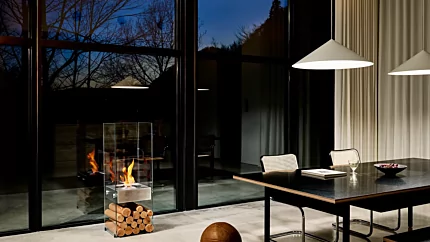
How do luxury fireplaces work?
Luxury designer fireplaces work on the same combustion principles as conventional ones, but the premium categories differ in fuel and infrastructure: flued models burn wood or gas and vent through a chimney or flue, while ventless bioethanol models burn liquid fuel that produces no smoke, so they need no chimney at all, only adequate room ventilation and clearances.
Which fuel type is best for a designer fireplace?
Bioethanol offers the greatest design freedom because it needs no flue, chimney, or gas connection, which is why it dominates the designer category; wood suits buyers who want the full traditional ritual and have the structure to support it, and gas suits those who prioritise push-button convenience over placement freedom.
Should I choose a built-in or freestanding designer fireplace?
Choose built-in when you want the fire to read as part of the architecture and you're confident in its permanent position; choose freestanding when you value flexibility, want to avoid installation works entirely, or may want to reposition or relocate the fire over time. Both formats exist within most ethanol designer fireplaces collections, so the choice is about commitment, not capability.
How do I choose between an indoor and outdoor designer fireplace?
Start with where you spend your evenings, then check the rating: indoor models require adequate room volume and ventilation, while outdoor models need weather-appropriate materials and greater overhead clearance. Several designer pieces are rated for both, which lets one fireplace move between settings with the seasons.
What should I check before buying a designer fireplace?
Verify five things: the model's indoor or outdoor rating, the minimum room volume and clearance requirements for its burner, the safety certifications relevant to your region, the availability of technical documentation for your installer or designer, and the fuel logistics, including how you'll source and store fuel.